Pages

Friday, July 6, 2018

Green Tea for the Tummy

Once upon a time I used to eat Tums as a regular part of my diet - usually as an evening snack. Heartburn (GERD) was a "normal" part of my life. You see, I inherited a hiatal hernia from my father. Everyone in my family did. At least that's what I believed, since everyone in my family had GERD at some level - most worse than mine. I passed it on to my son, too. (Sorry, Steve.)

With each pregnancy (four in all), the heartburn came on just about the time the morning sickness subsided--at about the sixth month--and stayed around until the bundle of joy arrived. The rest of the time, the heartburn usually showed up after a rich or spicy meal.

That was my life...until about six or seven years ago, when I realized I hadn't had to touch my Costco sized bottle of Tums in some time.

What changed?

I had been diagnosed with a fairly uncommon condition called a Gastrointestinal Stromal Tumor (GIST), a sarcoma which appeared as lesions on the wall of my small intestine. After surgery, I began to investigate what I might be able to do to avoid a recurrence. My surgeon at the time told me there was nothing I could have done differently to prevent the tumors/lesions, but I wasn't so sure. I knew enough to understand that food matters, so that's where I started.

My quest for truth started with a book called "The China Study," which implicated meat as the cause of cancer. In response, I faithfully became a vegan. That lasted about six months. The vegan experiment left me tired and foggy. My skin and hair had lost its luster, and my heavy soymilk consumption gave me an embarrassing uncontrollable flatulance problem. On top of all that, I was gaining weight. You can eat a lot of really bad food as a vegan.

Not long after, I ran across a book called, "Why We Get Fat, And What To Do About It," by Gary Taubes, which caught my attention because I was getting fat I and wanted to know what to do about it. I already guessed he was going to talk about carbs, because my dear old dad had already experimented with the Atkins Diet with quite good success. That book kick-started my one-eighty flip from vegan to paleo, a dietary "lifestyle" I adopted for a year or two. His more comprehensive tome, "Good Calories, Bad Calories," explained a lot about what happens on the cellular level when we eat food. From there, I picked up every book I could find on carbs, fats, grains, and the role of nutrition in health. And with every book I read, I began to make changes to my diet. By the way, in the course of my reading other materials, it was brought my attention that the conclusions made in The China Study have since been debunked. This shouldn't surprise anyone since mankind has been eating meat cancer-free since the beginning of mankind...well, at least since the Flood.

Anyway, it was during that transition that I realized I was no longer suffering from GERD. At all. Did I still have the hiatal hernia? Hard to say, since I haven't actually had any scopes done since that life-changing surgery. But I'm guessing it's probably still there, because the heartburn comes back to haunt me from time to time.

It comes back when I eat dessert. It comes back when I eat restaurant food. It comes back when I eat high-carb food, especially late in the day. It comes back with a vengeance when I go on a cruise.

The smart thing to do would be to stick with a low-carb, grain-free, sugar-free diet. It's the smart thing because it's the healthy thing. The heartburn is my body telling me to knock it off with the bad food.

So all of that brings me to the point of this post: and that is to provide two natural alternatives to the many over-the-counter "solutions" to heartburn. These two things have helped me lay down and sleep at night rather than spend the first two to four hours of the night propped up on pillows.
1. Apple Cider Vinegar -- There is a popular theory going around that indigestion (GERD, heartburn, etc.) is not the result of too much stomach acid, but too little. And frankly, it makes a lot of sense because oftentimes heartburn is accompanied by a feeling of fullness--food sitting on the stomach hours after a meal. A teaspoon to a tablespoon of apple cider vinegar in a glass of water provides the stomach with extra acid for digesting food that just won't move on. This works for me most of the time. Amazingly, once it hits my stomach, the burning sensation caused by the GERD stops almost immediately and I'm able to lie down within fifteen minutes to a half hour. 
2. Green Tea -- I discovered this while on a cruise some years ago. I'm not sure what the science is with green tea, but if I brew a cup or two in the evening after a meal of all the wrong things, it does a very good job settling my indigestion and allowing me to sleep without worrying about my dinner coming back to haunt me after I lie down.
There are times that I actually practice what I preach about eating a clean healthy diet free of all those toxins that plague long-term health, but I'll probably never be able to stick to it strictly because...well, I'm human.

If you are considering proton pump inhibitors, avoid them if you can. They have more harmful affects on your digestion than your doctor will ever tell you when he prescribes them to you.

My mantra is to try the natural remedies first. Pharmaceuticals may indeed be required at some point, but they should never be the first course of action because of the risk of harmful side effects.


Image citation: drax.com

Sunday, July 17, 2016

Emotional Eating - Distract and Conquer!

Emotional eating! Why do we do it? Who knows? There are tons of books and articles with professional advice on the issue, but everything they say depends on our power to make rational decisions. Unfortunately, when the emotions take over they pretty much tell the brain to "shut up and stay out of the way!" So much for rational decisions.

I realized recently that I am, indeed, an emotional eater. I guess I've always known it, but I finally came to the analytical conclusion that it is true after consuming the following:

  • One fairly large dark chocolate salted caramel (all natural ingredients)
  • A glass and a half of red wine
  • A handful of cashews
  • Roughly two ounces of crunchy potato chips (fried in olive oil, naturally)
  • A half cup or so of dark chocolate fake ice cream made from cashew milk (there seems to be a dark chocolate theme going on here)
  • Another handful of cashews
  • A handful of dark chocolate chunks (did I mention they were organic?)

That was my dinner...accompanied by five or six episodes of "Last Man Standing" reruns on Netflix.

What would drive a normally sane person to such behavior?

EMOTIONS.

When we get emotional - sad, angry, frustrated, aggravated, depressed - the emotions take over and the mind takes a "time out." I'm not really sure why that happens, but it does. And what emotions drive us to do is...well, anything comforting. Sometimes it's shopping, sometimes it's vengeance, and sometimes it's eating things that taste good.

The strange thing is that even though the mind takes a "time out" from control, it still  knows what's going on, and while our emotions might control, our rational mind permits. Nothing gets put into the mouth that the brain does not think about and approve. When we fall off the wagon, or in some cases jump off, we give ourselves permission to eat what we know in our rational mind is bad for us. Here was my internal dialog, more or less...

  • "This seems like a good time to eat that salted caramel in the drawer." One fairly large dark chocolate salted caramel (all natural ingredients)
  • "I should cook something for dinner. [open fridge door, stare for a minute, close fridge] I think I'll have a glass of wine." A glass  of red wine
  • "I'm hungry. What looks like real food?" A handful of cashews
  • "Still hungry, but probably shouldn't eat sugar. I know! I'll have some potato chips." Roughly two ounces of crunchy potato chips (fried in olive oil...naturally)
  • "May as well just finish off this bottle of wine...there's just a half glass left. A half a glass won't hurt." 
  • "Too bad I didn't buy any real ice cream. I guess I'll have some of Mark's. Cashew milk isn't the same, but it has chocolate in it." (Not even bothering to try to rationalize by this time.) A half cup or so of dark chocolate fake ice cream made from cashew milk (there seems to be a dark chocolate theme going on here)
  • [Still not satisfied...looking in pantry for ideas] Another handful of cashews
  • "Okay, I guess I'm not really hungry any more, but now I need something sweet. Again. Dessert!" A handful of dark chocolate chunks (did I mention they were organic?)

Don't misunderstand. Emotions can be a useful ally, as long as they're not allowed to run the show. As a leader, they are notoriously volatile, unreliable, and unfaithful. They are, in a word, liars most of the time.

There are, of course, healthy emotions, but most of the time, our emotions work against our best interests...misplaced fear, anger, jealousy, envy, self-pity, depression, and so on.

Emotions, for the most part, are not our friends.

So how do we fight the battle of Emotions vs. Brain? And, yes, it is a battle. You RUN!

All the good advice in the world about how to make good decisions in the midst of emotional assault will only help you if you can figure out how to fight the battle. And you can't fight it. Not head-on, anyway.

In a head-on battle, emotions will ALWAYS win. You know that's true - you've had the same kind of conversations with yourself that I just related. Probably many. The brain turns to mush and does whatever the emotions tell it to do...every single time.

The only way to get the best of them is distraction. Emotions only have power over you when you focus on them. When you think about all the things that are bothering you, the problems seem to grow and multiply, out of proportion, until the only thing on your mind all the time is your problem, carefully developed and magnified from that proverbial molehill into a mountain by your faithless emotions.

By turning our focus away from the problem - doing something for another person, taking a walk and appreciating nature, calling up a friend and chatting (about them, not you and your problem), starting that project you've been thinking about doing, and so on - by refusing to give our emotions the attention they demand, by treating them like the spoiled child they resemble, by sending them to their room and ignoring them, we give ourselves the time we need to shrink the problem back to it's appropriate size, unencumbered by emotional baggage, where it can be dealt with by the rational mind in a rational way.


...So today I distracted my emotions by making chocolate chip cookies. Of course I used all natural ingredients-- einkorn flour, pure chocolate chips and organic brown sugar. I only made a half batch (see how responsible I'm being?) And, boy are they good!

And that thing I was annoyed about? Still there, but I'm feeling so much better now, and I'll figure out how to dealt with it another day.


Sunday, March 20, 2016

Duped

Dupe (transitive verb)
[du:p]
trick someone; to persuade or induce somebody to do something by trickery or deception


How many things – products, electronics, drugs…things – do we own that we can probably live without? What things to we use, take, eat that we could eliminate and be healthier for the effort?

Every time we turn on the television or the radio, we are inundated with advertisements. Same with the computer. Companies exist to sell stuff – and they want to sell it to as many people as possible, especially YOU.

There are cleaning products especially designed for the face, for the hair, for the body, for teeth, for glass products, wood products, the car, the floors, the dog, leather, vinyl, jewelry, our sturdy clothes, our delicate clothes, the baby, the carpet, the vegetables, the drain, the bathtub, the toilet.

There are products that promise to get rid of wrinkles, help us lose weight, build our muscles or teach us a new language in only ten minutes a day, boost memory, or heal toenail fungus.

Most of them don’t perform as promised.

And then there are the drug companies, pushing their wares on television and radio with happy, soft spoken people, all the while listing off a litany of dreadful side effects, many of which are worse than the ailment their product is claiming to relieve. “Ask your doctor if Drug ABC is right for you.”

We are being duped!

I just purchased a product called “Everyone Soap” – 3 in 1 for hair, body, and bath (as in bubble bath), made from organic plant extracts. I asked myself, “Why not?” Why did I ever think I needed three different soaps to clean my body? Duped, that’s why. Now I have one bottle in my shower caddy instead of three.

Imagine the money you can save by not caving into the marketing hype. Do you think it’s possible that one cleaning solution would work as well for walls and floors and toilets and sinks? What about clothes? (How did our ancestors manage?)

Just last month I discovered how to stop underarm odor with baking soda! Seriously, did you know that such a universal problem had such a simple solution? And one that costs pennies?

I’m really grateful to the Primal Pit Paste people for making an organic deodorant, because a couple years ago when I made the decision to stop using the standard mix of toxic products available on the market, their product was the best organic alternative I could find for odor stopping power. It really works! But the other day when I looked at their active ingredient, I found that it is, in fact, baking soda. So, thank you, Pit Paste…but if that’s all there is to it, why would I not want to just make my own?

And so I did. My version is in powder form, because it’s simpler to make, but it is every bit as effective as the store-bought alternative. Here is the recipe:
·         1 part aluminum-free baking soda
·         2 parts corn starch or arrowroot powder (full-strength soda will irritate the skin, so always dilute with a neutral powder)
·         1/8 part Epsom salts (magnesium also has odor-fighting)
·         A few drops of your favorite essential oil
·         Sift together, work in the essential oil droplets with your fingers, and put into a shaker bottle (an empty spice jar works great).

It takes five minutes to make, and lasts a couple months unless you’re sharing it with someone. You actually CAN share it with someone, because the deodorant is being shaken out of the container onto one’s hand for application to the armpit – not applied directly to the body. (Caviat: It doesn’t stop perspiration, but then sweating is an important bodily function and perhaps shouldn’t be stopped anyway.)

Americans are being duped on a daily basis into believing they need things they don’t need. Of course companies have the Constitutional free-speech right to try to get you to buy their stuff. But there are two things that bother me.
1.    Most of the time the advertising claims are just plain false. Sometimes the deception is easy to see, but oftentimes it isn’t. How many processed food products can you think of that claim to be “healthy” or “all natural?” The very fact that they come in a cardboard box is enough to negate that claim.
2.    More often than we realize, the product is loaded with harmful ingredients such as toxic chemicals or hidden allergens.

The language of marketing is designed to deceive. If they told you the truth about their products, you would never buy them. And don’t depend on the government to keep businesses honest. Regulations give marketers plenty of leeway to make their false claims. As long as there are Washington lobbyists, laws will always tilt in favor of those who pay the most. (Hint:  It isn’t you and me.)

At the end of last year I began the project, once again, of simplifying my home and, in many ways, my life. It’s been an ongoing goal of mine for many years, and one in which I’ve had little success until recently. What changed?

I ran across a book called The Life Changing Magic of Tidying Up, by Marie Kondo. Being the book junkie that I am, I thought, what the heck – I’ll check it out. I didn’t really expect to read anything new or different from all the other organizing books I’ve ever read. But I was surprised by a whole new way of thinking. The author’s methods were based not on how to organize what you have, but on learning how to know what to have and what to get rid of. I discovered that the clutter in my home was caused by junk I didn’t need. Who knew?

By the time I was done with the “tidying” project, I had learned something else along the way – how to think a little more critically when shopping.

“Do I really need this?”
“Are the claims on this product believable?”
“Can I accomplish the same thing with something I already have?”
“Will it simplify my life or just clutter it up?”
“Will it spark joy?”

These are some of the questions I now ask myself before I add another thing to my collection of things-- after reading labels of course. No doubt I’m still going to be duped from time to time. I am human, after all, and ever on the lookout for ways to make my life better, or easier, or more interesting.

But I’m onto them now. I’m wising up. I’m reading the fine print and between the lines. I will no longer be easily duped.


Image credit:  meditationsofacynic.wordpress.com


Monday, February 15, 2016

Adventures in Acupuncture

From the time I can remember, I have been terrified of needles.

Horrified.

Petrified.

My dad loves to tell the story of how I bent the needle while being held down by him and four nurses as they tried to give me a shot…after being brought into emergency in a pneumonia induced state of lethargy. Anyway, you get the picture. Needles and I don’t get along.

On a previous cruise, my dearly beloved husband, having injured his back between going in to use the men’s room at the cruise terminal and coming out (I still can’t really explain how THAT happened), decided to make use of the acupuncture services on board the ship. Three days and four hundred dollars later, he was a new man, once again capable of trudging around the ship decks to get food, and getting himself back and forth to the tour buses to discover the beautiful Caribbean islands like a real tourist.

“You should try it,” he suggested when I began limping and straining on the ship’s staircases during our recent Minnesota winter getaway cruise to the equatorial warmth of the Caribbean. “We’ll see how I feel once I’m not sitting at a desk all day every day,” I replied.

We walked, we climbed up stairs, we climbed down stairs, we walked some more. I get more exercise on vacation than I ever do in my regular life. Day one: sore hip. “You should try acupuncture,” he says. “We’ll see how I feel,” I replied. “It’s just been one day.”

Day two: more walking, more climbing, no change. “So, what about that acupuncture,” I ask? “Do you feel it?”

“No, you don’t feel it,” he tells me. (“Liar,” I’m thinking.)

So I make the appointment. Mark, when he had his acupuncture, got a Chinese specialist straight from China who had been practicing since they built the Great Wall. I get a blond woman from Vermont with a whopping four years of experience who’s done “thousands of treatments” in her long illustrious career. My confidence is waning, but I make the appointment anyway.

After filling out a questionnaire and pointing out the best I can where it hurts, she proceeds to turn me into a pin cushion—twenty needles in my feet, hands, and calves, plus one between the eyes for good measure – essentially everywhere except where it hurts. This is Chinese medicine, so what do I know? She’s the expert. My chi is plugged up she explains.  I don’t get it, but she assures me it will help. Next day I seem to be feeling slightly better, which I relay to the “doc.” She repeats the treatment from the day before. Third day I confess that I’m not really feeling better after all, so this time she puts the needles in my lower back, hip, and down my left leg, and reminds me that acupuncture takes time.

That much I have figured out. And at $100+ per treatment, my body is going to have to figure out how to heal without the help of acupuncture.

Now to answer that question you’re probably wondering about if you never had acupuncture…do you feel it?

No.

And yes.

I did not feel most of the needles. Some of them I felt very lightly, but not in any way that one would associate with pain. However, there were two or three pricks over my three sessions that stung like the dickens, but even those calmed down after a minute or two and I didn’t feel them again.

Trying acupuncture was a bold adventure for me, a facing of one of my most ingrained fears, and I’m glad I did. But I am not one to throw good money after bad, so if three sessions don’t bring me relief, the experiment is over. And until acupuncture services become as affordable as chiropractic care, they will never be my first course of action.

Now that I’m home, I will manage my hip pain the same way I have in the past:  see my chiropractor, get a massage or two, return to yoga practice once or twice a week, and – probably the most effective action of them all – eliminate the wheat products from my diet. I’ve found that wheat (or gluten, more likely) seems to aggravate joint and muscle pain in my body, and while I was vacationing, I was quite bad with my indulgences.  So returning to a mostly Paleo diet for a while will probably help the healing process.

Acupuncture is probably not for everyone, and possibly not even for every ailment. Would I recommend it? I have an acquaintance who swears it is the only treatment that freed her of her chronic back pain. It certainly helped my husband when he needed it. So, yes, give it a whirl. I may yet consider it in the future for other types of pain. The only side effects are possible bruising and punctured lungs. (Yes, Ms. Vermont actually told me when I was signing the waiver that, if inserted incorrectly into the chest, an acupuncture needle could puncture a lung.) So, for best results, make sure you see a licensed, qualified, and well-established practitioner who knows what he or she is doing.

I wish you success!


Image Credit:  www.mysticriveracupuncture.com 


Sunday, January 17, 2016

Mastering Mayonnaise

1.  Find a recipe you like.
2.  Acquire a hand mixer with a whisk attachment.
3.  Use said electric whisker to make mayonnaise.

It’s that simple. Who knew?

Now, you can either read the rest of my blog, or go make some mayonnaise.

This is my story...

Some time ago, I decided I would try to make some homemade mayonnaise because I like mayonnaise and I don’t like soybean or canola oil. I dare you to find a single brand of mayonnaise made without vegetable oil. Or bean oil. Or grain oil (corn). I could go into a long tirade about the evils of polyunsaturated fatty acid and the health benefits of saturated and monounsaturated fats, but I’ve already done that in other posts, so I won’t repeat it hear. In any case, there is an abundance of information on the internet about this topic, so I won’t belabor it. Suffice it to say, polyunsaturated vegetable oils manufactured by industrial processes are the most harmful of foods and should be avoided as much as humanly possible (regardless of what the government says).

You’re probably thinking, “Wait! What are you talking about? I’ve seen several brands of mayonnaise out there made with olive oil.” And you would be right. Sort of. In an effort to draw in consumers who understand the health benefits of olive oil, many of the mayo makers are indeed beginning to market mayonnaise “made with olive oil.” Good news, right? No.  Read the labels. Yes, they contain olive oil, but the main ingredient in every case is vegetable oil. After all, olive oil is expensive. And besides, the government has declared that dangerous, unstable polyunsaturated fats are the healthiest oils there are ... which no doubt is the result of extreme pressure from the food lobbyists representing the purveyors of those oils.

So I decided, to heck with store-bought mayonnaise! I will make my own.

Inspired by a Facebook post with a YouTube video of a guy making perfect mayonnaise “every time” with an immersion blender, I gathered all my ingredients and proceeded to fail at making mayonnaise with my immersion blender. Not once, but three times. It was truly disappointing, not to mention I used up every last drop of oil in my pantry in the process.

A month or two later, after the painful memory of my first failed attempts had faded somewhat, I decided to try again, only this time using a standard blender. Again, the result was a pint of runny yellow goo. By now, I was convinced that mayonnaise was the domain of culinary scientists like Chef Roberts and Alton Brown, and not for the likes of me.

But early last year, I picked up Michelle Tam’s new cookbook, NOM NOM PALEO, FOOD FOR HUMANS. Like a message from God saying, “Don’t give up – try it one more time!” I found within those pages a recipe for mayonnaise, complete with detailed instructions – and pictures.  

So, being the tenacious type, I gave it another whirl (sorry for the pun). This time, I used a regular old hand mixer with a whisk attachment, followed the instructions, and to my delight, I ended up with a pint of beautiful light yellow mayonnaise to rival the best store-bought jar you can find. I was thrilled.

Since that effort, I have never had a failure. Not one. I’ve made it about a dozen times or so, with beautiful results every time.

You can find any number of recipes for mayonnaise in cookbooks or on the web, or you can buy Michelle's cookbook and use hers. But I do have a few comments and suggestions drawn from my own experience:

1.  I use light olive oil. It will give you all the health benefits of monounsaturated fatty acids without the heavy taste of extra virgin oil. Avocado oil is another very healthy oil, but the oil you choose will affect the taste of the final product, so keep that in mind. Whatever you do, DON'T use vegetable oil - you may as well save yourself the trouble and buy Kraft.
2.  Use very fresh eggs from pastured chickens if you can find them. The mayo will only last as long as the egg(s) it’s made with.
3.  The egg yolk(s) should be room temperature for best results.
4.  You probably COULD use a hand whisk, but I’ve never done it and I don’t recommend it unless you’re trying to build arm muscle and have very good coordination for the necessary whipping and pouring. Just holding the mixer for the duration is a work-out for me.
5.  Don’t rush the oil flow. It takes me about 15-20 minutes to make a one-pint jar of mayo. Time requirement (to incorporate all the oil) will vary based on how much you make.

Americans have been buying manufactured food for so long we’ve forgotten how simple it is to make our own. This week I put together from scratch one of the best ranch salad dressings I’ve ever eaten – again totally absent of vegetable oils or added sugars. I’ll post about that later on.

My point is, we don’t have to be slaves to what the big food makers give us. In a world where our food is routinely filled with questionable and sometimes downright toxic ingredients, there is another option. And it’s not that hard. Create your own. Cooking from scratch will ensure that you know what’s in your food – no labels to decipher, no hidden allergens or GMOs to worry about.

Up for a challenge??

Master your own mayonnaise. You’ll be doing your body good.


Image Credit:  www.foodnetwork.com

Sunday, January 10, 2016

Government “Recommendations”

The government, particularly the U.S. Federal Government, is fond of providing Americans with its recommendations for our health and well-being.

The question we should be asking ourselves is this:  Is the government qualified to make recommendations about our health - or anything else, for that matter?

In light of the fact that scientific and nutritional research is continually revealing new information, and subsequently re-evaluating what’s good or bad for us on a very frequent basis, how can a bunch of politicians possible know what to tell the American public?

An example of this is an article that came out just this week in The Telegraph, a British publication, about a study concluding that red wine, previously thought to be healthful in moderation, is now bad for you in any amount. Why? Because it contains alcohol, which is toxic to the liver. This fact has been known for pretty much ever. But the health implications are being re-examined, probably not for the last time.

The biggest question that plagues most of us is, why does health information keep changing?

The problem with studies in human nutrition is that the human body is intricately complex, and separating out the effects of even one food, not to mention one element of a food, is difficult if not impossible to do. Such a study would have to be done in a completely controlled, institutional environment where “cheating” would be impossible. Like a prison. No one ever “cheats” in there, right?

Nevertheless, on Thursday of this past week, the USDA came out with its new updated Dietary Guidelines, as reported by NBC News (which, by the way, are solid until 2020). These guidelines were finally released “after a year of arguments, lobbying and directives from Congress,” the article stated. It reported that the guidelines were an admitted compromise – no surprise there. The government has to keep everybody happy, you know - especially the ones who line their pockets.
“HHS and USDA walked a fine line in issuing the guidelines. They considered advice from nutrition and public health experts, food industry experts, farmers and politicians.”
And we all know how important the opinions of food industry “experts” and politicians are.

Once again, with the release of this new and improved Guideline, the government has shown that it still does not understand nutrition, in spite of the very intellectual and prestigious persons on their Advisory Board. The guidelines reflect more of an effort to not rock the boat than to give the American public trustworthy advice.

Here are a few things that jumped out at me.

Cholesterol – They finally agree that dietary cholesterol has no impact on blood cholesterol (yay!), and yet they still recommend "eating as little dietary cholesterol as possible." Why? Because dietary cholesterol is linked to foods high in saturated fat, which everybody “knows” is bad for you.

Saturated Fat – No study has EVER been done to analyze the effect of organic saturated fat consumption (fats naturally present in meat, eggs, and dairy) in the human body, using the scientific method  – that is, a double-blind, random-selection study that isolates organic saturated fats from toxic trans-fats found in manufactured foods. Every nutritional study on fats lumps all solid fats into one bucket, which shows a glaring lack of understanding of fats in general. Instead, study results rely heavily on what the subjects report in questionnaires, based on what they logged or remember having eaten over a given period. If you've ever tried to keep a diet log, I rest my case.

In fact, the most current research suggests that the big culprit in chronic illness is not saturated fats, but polyunsaturated fats, which are the most unstable (inflammatory) fatty acids of all. You can read more about this in publications such as THE BIG FAT SURPRISE, by Nina Teicholz, and KNOW YOUR FATS, by Mary J. Enig PhD (a well-respected lipid expert). Despite this new revelation, the government Guidelines still recommend that we replace as much of our fat intake as possible with polyunsaturated fats, the oils manufactured from corn, soy, and seeds.

Sugar Consumption – Everybody knows that sugar is bad for us. It makes us fat and it makes us sick (diabetes). If these Dietary Guidelines were honest, they would tell us to cut out added sugar completely. But then there’s the sugar industry to worry about, and the big soft drink manufacturers, and the corn industry that pumps out vats and vats of high-fructose corn syrup from their surplus corn supply (for which they get subsidies from the government). Besides that, just about every single processed food on the market contains added sugar, usually in the form of high-fructose corn syrup. So, the wise government has extended a compromise by recommending that we keep our consumption to 10%. For a 2,000 calorie diet, that’s 200 calories a day we can spend on the processed food of our choice, over and above the sugar naturally present in the two cups of fruit we should eat.

Grain – The 2016 guidelines continue the old assumption that grains are critical to a balanced diet. They tell us we should eat six ounces of whole grains a day, which is equivalent to six slices of bread. Who decided that human beings cannot live healthy lives without grain? There is abundant evidence of cultures around the world that have thrived for hundreds, probably thousands, of years eating a grain-free diet (like the Inuit populations). Current research is finding that humans may actually be healthier if they DON’T eat grains - of any kind. Autoimmune diseases, as well as neurological ailments like Alzheimer’s, are being connected with “leaky-gut syndrome,” a condition caused by the gluten in our modern wheat. You can read more about this in the well-researched books, GRAIN BRAIN, by David Perlmutter MD, and WHEAT BELLY, by William Davis MD (or by searching online).

In a spirit of fairness, the 2016 guidelines are certainly an improvement over those of the past. Still, for the federal government to behave as though it is the prevailing authority on - well, anything for that matter, would be laughable, if it weren’t oft times downright dangerous to our well-being.

Politicians are not experts – they’re just politicians. They should stay out of the business of giving advice.

What should we eat, then?

Do you think Americans can figure it out without the government’s help? I do. We have access to the same information the government uses to makes its recommendations. We just need to access it. The government thinks you are too stupid to know what’s best for you.

THAT should make you down-right annoyed.


Image Credit:  www.uab.edu


Friday, January 1, 2016

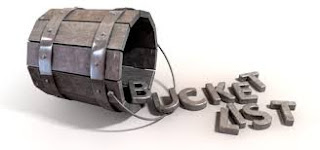
Bucket Lists


Along about the fifth or sixth decade of a person’s life, they start thinking about bucket lists – you know, those things you want to do before you “kick the bucket.” Many times the list includes places you want to see, things you want to accomplish, and so forth.

For the past few months, I’ve been thinking a lot about what I’ve read and what I haven’t read. You’ve probably seen the Facebook posts going around on the topic: “Best books to read in your lifetime – most people have only read six”...there are a few variations. As I reviewed the lists (as of course I had to), I was pleased to discover that I have indeed read more than six - but sadly not very many more. Perhaps a dozen. And the exercise made me realize that I’ve missed out on a wealth of literary richness – a wealth that is fortunately still within my grasp. And so I have decided to create a bucket list of my own - a Reading Bucket List.

As a child, I never cared much for reading. I don't remember ever reading anything of significance that wasn't required for school... until junior high. My eighth grade English teacher was fond of reading aloud to her students for the first fifteen minutes of class and strongly encouraged us to explore the world of reading. Interestingly (and much to the probable chagrin of my parents, had they known), the book she chose to start the year with was Rosemary's Baby. While I wouldn't necessarily recommend that book to anyone, it was intensely interesting to me at the time, and it hooked me once and for all on reading.

Over the course of my high school years, I read a few of the classics:  Of Mice and Men, anything I could get my hands on by Dickens, 1001 Nights, and even a little Shakespeare - Romeo and Juliet (it didn't hurt that the movie by the same name was playing in the theaters at the time).

After my children were born, I read to them and encouraged them to read as they got older. We obtained a large bookcase and filled it with books for every age. We read E.B. White's children's classics and C.S. Lewis' Narnia Chronicles, Black Beauty, and many others.

But as the kids grew up and left home and my busy work life took over, my reading passion ground to a halt for many years. When I took up reading again, my focus was on nonfiction and has been that way up until now.

Of course, nonfiction is tremendously important for broadening one’s scope of practical knowledge and developing the skill of critical thinking. But nonfiction is where we go to enrich our imaginations. In nonfiction, we often find hidden philosophical concepts and ideologies that might not match our own but give us an opportunity to see beyond the box we’ve created in our own minds. Nonfiction takes us places we can never go in the real world. It often teaches lessons of moral relevance. It sometimes takes us into darkness and terror and sometimes delights us with comedy or romance or swashbuckling adventure. It entertains using words and our own unique imagination.

Why read when we can watch a movie or TV show based on the book? Two reasons.
  • Reading engages the mind in a way that visual representations never can.
  • Movies can never capture the full scope of a book.


So, what about my bucket list? In order to get a good rounded recommendation for the “best” books to read, I pulled up about eight or nine different lists that I found on the internet and compiled them into one, ranked by how often a title occurred among the lists. What I ended up with was a little more than 175 books. I figure these will keep me busy for the next seven to ten years – maybe more, since I keep adding my own selections along the way (not to mention the nonfiction titles that will push their way into my list on a fairly regular basis). 

Below are the top 15 that I will attempt to read this year. Most of the titles are familiar. Some from the lists I used don’t appear because I have already read them (among them: The Lord of the Rings, Jane Eyre, To Kill a Mockingbird, the Harry Potter books, Animal Farm, and others). 

So, what’s on your bucket list? Places to see? Things to do? Do you have one? You may not be riding down the other side of the “hill” just yet, but the longest life is still incredibly short in the big scheme of things. There's never enough time. Start now to do the things that bring joy.

Maybe 2016 is the year to forget the resolutions, put together some buckets and start filling them up.

God bless, and have a very meaningful and happy new year!


P.S. For the morbidly curious, I have published my full list as a supplementary page. 

Image Credits:
privateschoolreview.com
ehlenplum.org


Wednesday, December 30, 2015

The Prodigal Blogger: A Year in Review

Despite all the good intentions bubbling out of my very pores at the beginning of 2015, my regular blog came to a screeching halt after a single posting. I didn’t plan it that way, but life has a way of changing all our plans.

This year, for whatever reason, seemed to be one of turmoil. Ferguson, followed by the “Black Lives Matter” movement, ISIS, marriage definitions, gender definitions, riots at home, terrorism on the rise at home and abroad— all these and more have put the country and the world on edge. Political and racial divisions are as deep as ever. Anger seems to be the defining emotion.

For me, the year has been so full and busy it seems to have passed in the blink of an eye. It’s a struggle to even remember what I did or accomplished. Rather than steering the boat of my life down the river of the year, it’s more like I hit a roaring rapids and lost my oars.

But here are a few highlights/lessons I learned along the way…

·    Never take a cruise at Christmas time. You will discover that enjoying the beauty and warm air of the Caribbean doesn’t hold a candle to spending this joyful holiday with your loved ones.

·    Flying somewhere is no match for a road trip. But if you’re going to take one, make it leisurely and see the sights. You will be glad you did.

·    Turn off your television. If you don’t, it will steal every last moment of your life it can get its hands on; and it gives you nothing in return.

·    We tend to stop celebrating our birthdays from about age 40 to 69 or so.  Celebrate every birthday! You may reach 90 (like my dear old dad has this year)… but the truth is, we have no guarantee of tomorrow. Every day is a gift. Don’t cheat yourself out of the joy of life by pining over your age.

·    Dream and plan. Your dreams and plans may or may not work out, but dream and plan anyway. If you don’t, you’re deliberately tossing your oars in the water.

·    Your children are not clone copies of yourself (thank God!) Love them for who they are. And when they grow up, love them for who they are. They usually forgive you for all the mistakes you made raising them.

·    When you fall off the wagon (whatever wagon you’re riding), dust yourself off and get back on. Where there’s life, there’s hope.

I feel like the prodigal child when it comes to my blog. After a couple months of posting nothing, I was ashamed to even open the page and look at it. The more time that went by, the more loathe I was to even think about blogging ever again. I even considered dismantling the blog site altogether. Such is the progression of self-despising behavior. Who wants to read what I have to say, anyway?

And that might be true. Or it might not.


Either way, I’m climbing back onto my blog-wagon.

The internet is a marvelous structure. Never before could an average “Joe” speak his mind to the world. My love of writing may never produce a published work, but the internet has allowed me to pursue my love of writing all the same. In a sense, this blog is the fulfillment of my lifelong dream to become a writer. Whether anyone reads it or not is, for the moment, irrelevant.

Certainly, this past year has been a year of turmoil, both public and private. And turmoil is distasteful and difficult to endure. But without turmoil, change is nearly impossible. Turmoil drives us to fix what’s wrong, to seek a better way, to learn and grow, to reinvent ourselves, to figure out what’s really important.

What will 2016 have in store for us? Only God knows. As with every year, it will have both good things and bad, but the key to navigating the waters is knowing the One who knows. I’m trusting in Him. How about you?


Image Credits:
smallbiztrends.com
paulojorgeviera.wordpress.com

Sunday, April 19, 2015

The Food of God

“God has set eternity in the hearts of men…” Ecclesiastes 3:11

Don’t we all love a good story about immortality? The Elves, of Lord of the Rings, who lived hundreds or thousands of years, fascinate us with their depth of wisdom and their ageless beauty and strength.  Then there’s the Highlander TV series (of the 1990s)about a race of immortals who spend their time hunting each other down and cutting off their heads. The newest installation in this genre is Forever, a story about a medical examiner who reemerges in the Hudson river every time he gets killed.
 
We seem to have an obsession about living forever, in spite of the fact that most people, if questioned about it, will tell you they wouldn’t want to. What about you?

According to the Bible, humans did in fact used to live very long lives. Adam, the first human, is recorded to have lived 930 years (Genesis 5:5). In fact, all the people recorded in Genesis prior to the Great Flood lived hundreds of years—the oldest being Methuselah, who died the year of the Flood at 969 years of age (Genesis 5:27).

The aging process didn’t seem to change significantly until after the Flood. Prior to the Flood, we were all vegetarians. It wasn’t until after the Flood that God gave us meat as an acceptable food (Genesis 9:3). Furthermore, in the end, we will again be vegetarians, according to Scripture:  “The wolf and the lamb will feed together, and the lion will eat straw like the ox…” (Isaiah 65:25). If the lion and the wolf are eating vegetation, you can be sure that humans will too. But in between the Beginning and the End, we have leave to eat anything we want…as far as God’s concerned, at least. And we shouldn't consider any kind of food that He has made and given to us as being wrong to eat (Acts 10:15).

We have lots of choices and lots and lots of “experts” telling us what is healthy and what is not. There are the Vegetarian proponents who think killing animals for food is somehow evil. You have the Vegans who won’t eat anything remotely related to an animal. And you have the Paleo group who believe our ancestors were cavepeople who ate only meat and a few nuts and berries.  There’s the “organics only” crowd who will eat it if and only if it says “organic” on the label. Finally, there’s everyone else, who just eats whatever happens to find its way into the local grocery store. Have you identified yourself in this list?

There are probably a number of reasons people don’t think they want to live a long time, the biggest being that we associate old age with illness and incapacity. But what if we could grow old without falling prey to chronic illness? Would that change the way you feel about long life?

I propose a new way of eating – which is actually an old way of eating. I’ll call it the Food of God Diet.

The Food of God Diet bans anything that has been adulterated by man…or more precisely, by man-ufacturers, and contains only foods actually made by God, in their original form. Some of you may be smiling now, because you’ll recognize this as a “whole foods” diet. And you are exactly right.

This diet has been around for thousands of years, and is surprisingly different from culture to culture. On it, people thrive well into old age. The now famous, Dr. Weston Price, discovered this simple truth in his research of primitive cultures eating traditional diets – many different in the extreme – but all similar in one respect-- that man-made or man-altered (refined) foods were nowhere to be found among them.

What Dr. Price concluded was that the human body is amazingly resilient and can adapt well to any natural diet. It is only when refined, denatured food products (processed foods) are introduced that we begin to have problems with our health – dental problems, difficulty resisting illness, and trouble with chronic diseases like cancer and diabetes.

So what does this mean for you?
·         Vegetarians:  Start with whole fruits and vegetables. Take the trouble to learn about traditional methods of preparing them. All fruits are healthier whole and uncooked. Some vegetables can be toxic until you cook them. Some are healthier raw. Avoid refined grains. If you eat legumes, sprout them first or follow soaking protocols that will help neutralize the phytic acid present in this type of food. Use traditional methods to prepare your food. Avoid any processed foods. Milk products should be consumed raw or fermented. Eggs should come from chickens ranged properly in the sunshine on grass and bugs. (Also, see Organic below.)
·         Vegans:  Same as above (disregard milk & egg advice).
·         Paleo:  Meat should come from animals raised on their natural foods (grass-grazed beef,  lamb, and chicken and wild-caught seafood). Vegetables and fruit should be clean (avoid GMO and pesticides).
·         Organic: My first food rule is that food should be uncontaminated by chemicals and raised in a way that honors God’s creation. Having an “organic” label helps, but organic labels come with a price tag, thanks to government regulation. Know your farmer. If you don’t know where your food comes from, buy organic. That said, there’s a ton of food products out there labeled “organic” that are processed to the point there is no nutrition left in them. If they are processed, they are not whole. Avoid those things.
·         Whole Foods (God-food):  Keep doing what you’re doing and be careful to buy clean, uncontaminated food (avoid GMO and pesticides).
·         Standard American Diet (SAD), a.k.a. everyone else:  Throw away everything in your pantry, fridge, and freezer and start over with one of the above diet protocols, unless you’re okay with having a very short, sick life.

Two notes about grains—
1.       They are almost always processed. If grains are a part of your diet, the best way to eat them is to buy the whole grain and process it yourself just prior to eating. Whether that’s oats, or rice, or wheat, never buy already ground up grain. The reason for this is oxidation. The fatty acids in the germ will go rancid quite quickly—within a day or two, causing toxic oxidation in your body when you eat it. There’s no such thing as fresh wheat flour.
2.       Watch out for gluten, especially wheat gluten. It is known to damage the gut, and there is evidence to suggest that it is responsible for neurological problems as well. It is quite possible that just about everyone who eats wheat eventually develops intolerance of some degree to gluten (read Grain Brain). Any grain containing gluten should be eaten only rarely and in small doses. If you grind your own, like you should, the trouble that you need to go to in order to prepare it properly will be a deterrent to eating it too often. Alternatively, choose wheat alternatives with less gluten, such as einkorn or spelt.

Ultimately, our lifespan and our health are in the hands of God, and the food we eat is only one aspect of good health.  It is not magic, and it won't heal all our ills. Still, avoiding the things we KNOW are harmful to good health just makes good sense.  Man cannot come close to replicating what God has made. Stick to the real thing…and I wish you a long and healthy life!

A final thought…
“Man shall not live by bread alone, but by every word that comes from the mouth of God.” Matthew 4:4


Wednesday, December 31, 2014

Happy New Year 2015

Happy New Year to all my readers! I hope you had a blessed and healthy 2014.

Are you a resolution maker? The older I get, the fewer resolutions I make. This may be partly due to the fact that I rarely keep them longer than a month or two. I am, after all, the Queen of Inconsistency.

This year I have one resolution, which I may be able to keep since it will only be 30 days long. I am giving the Whole30 a try. For the uninitiated masses, Whole30 is an eating plan that focuses on removing potentially unhealthy foods from the diet, particularly grains, sugars, dairy, alcohol, legumes, and pretty much all processed foods. I'm not a die-hard proponent of Paleo eating, though I believe it has its benefits, and this eating plan is VERY Paleo. But my goal with this experiment is to see if it really helps to improve my chronic muscle pain, which is my only significant health issue (not bad for 61!)

Mark and I ended our year with another Caribbean cruise. It was delightful! It was warm. The food was terrible! Tasty, but terrible. There are times when I think I could cruise for literally weeks on end. But, the truth is I am incapable of resisting the bad food.  If you've ever been on a cruise, you know what I mean-- the morning pastries, the endless dessert buffet, and the frozen margaritas! Not to mention, who knows what kind of ingredients they use to feed three thousand people - without a doubt it's not remotely organic. Unfortunately, they won't let you cook in your room.

So, at the end of the week, my ankles and legs were swollen -- a sure sign of toxicity -- and I had gained eight pounds. Besides which I managed to bring home some kind of bug and have been struggling to get well for the past three days. I'm ringing in the new year this evening with a box of tissues and a bottle of elderberry syrup.

But on the whole, it was a very good year. I hope it was for you as well.

Tomorrow, I will do my traditional New Year's Day activity - laundry. And I will hunt for some nice Whole30 recipes to get me started in my January plan. Perhaps by February I will be a new person. (Wouldn't that be nice?) If not, I can tell you right now that the dark chocolate is coming right back out of the pantry with no regrets.

I thought you might be interested to know that the all-time most read post on Food For Thought is The "Healthy Fat" Debate. It looks like many of you are also interested in discovering the truth about fat!

Have a safe and healthy 2015, and may God richly bless!


Saturday, November 22, 2014

The Big Fat Lie

I'm in the middle of reading The Big Fat Surprise, which sheds yet more light on the growing consensus that saturated fat really doesn't hurt us, it certainly doesn't contribute to heart disease, and it may, in fact, actually be GOOD for us.

Aside from that, it also sheds a great deal of light on how our current scientific research machine really works. Once upon a time, if a researcher wanted to study something that went against the current trend of ideas, he might have had a chance. Not so in our brave new world where "settled science" rules and any evidence to the contrary is squashed like an unwanted bug.

Once the government decides something is true, that's pretty much the end of the discussion. Such was the case with the diet-heart hypothesis that gave us the low-fat diet. If you are a researcher with doubts who wishes to study a different possible cause, good luck getting any funding.

The problem with this dogmatic establishment science is that when they get it wrong - as they often do - any possible corrections take decades. In the meantime, we all blunder along under a false confidence that we are, in this case, eating a "prudent" healthy diet, when in fact we are eating all the wrong things.

I visited my doctor last week for an updated "Lipid Panel" blood test. She talked to me about my cholesterol and how I should reduce my saturated fat intake--eat less red meat, more chicken. I wanted to pull my hair out. She's a naturopathic practitioner. As politely as I could, I asked her if she'd read anything regarding the current cholesterol/fat debate. She cited a 2012 study that cautioned against too much fat... except, like all studies of this sort, it didn't control for healthy saturated fat, but instead lumped together all fats (including unstable polyunsaturates) AND carbohydrates...and then, of course, blamed any resulting problems on saturated fat. This is the modus operandi of all diet-heart studies. Saturated fat is the villain. End of story.

As a Naturopath, I had hoped my doctor would be more tuned in to stuff like this. But...not so much. I'm planning to recommend this book to her. We'll see how that goes.

Nowadays, most cholesterol tests, which are actually lipid tests, look at a broad list of factors. Where they once just gave you your overall cholesterol number, they now break out a variety of particle counts. In 2003, my cholesterol test sent back four numbers: Total Cholesterol, HDL, LDL, and triglycerides. Now the panel has nineteen values, among which are particle size counts (small dense lipid particles are bad, and large buoyant lipid particles are good) and a variety of other biomarkers such as C-Reactive Proteins, which measure inflammation, and Lp(a) (pronounced L P little a), which is an inherited factor that can't be controlled by diet or drugs but can be reduced with niacin.

How did I fare in my lipid test? My diet is very high in saturated fat-- I can't tell you exactly how high because I'm not doing any scientific analyses on what I eat, but it includes lots of butter, bacon, coconut oil, coconut milk, and meat--RED meat. But I can tell you it's much higher than the 5% to 6% recommended by the American Heart Association-- probably closer to 30% or 40%.

My small dense particle count is still too high (probably due to my cheatin' heart giving in to bread and sugar more often than I should), but my large buoyant particle count is literally off the chart. It turns out that eating a lot of saturated fat causes your body to make lots of large buoyant HDL particles. That's right - the good safe particles.

Since high cholesterol appears to be protective in women, particularly older women as well as older men, my 226 number (rated "borderline high") doesn't bother me one little bit. Matter of fact, it makes me happy.

I do have that hereditary Lp(a) problem, but I've been taking niacin for it, which has dropped my number by 25% (from 60.5 to 40.5) over the past six months. It should be down in the normal range (0-30) by my next blood draw.

It's easy to get really caught up in the foods we eat, especially once we become aware of the impact of food on our health. At the beginning of the year, I adopted (more or less) a Paleo diet. Okay, it's probably more less than more, but I've discovered that it isn't a magic pill for staying healthy. I question the whole Paleo philosophy because its premise disregards a Creator God. Paleo says consuming another animal's milk is unnatural, but mankind has been eating dairy products since Genesis. The Land of Milk and Honey doesn't mean anything to a society that doesn't eat dairy. Is it possible that God has always intended us to eat dairy, and maybe it's the damage caused by pasteurizing and homogenizing the milk that makes it hard to digest? Grains such as wheat that have changed significantly from the ancient grains, along with the way we prepare them for eating, no longer provide the best nutrition, but mankind ate those ancient grains for thousands of years without developing leaky gut, cancer, or dementia.

There is a lot wrong with our food, but cutting out entire natural food groups because of some assumption that humans never used to eat them may not be the best way to manage diet.

Instead, perhaps just going back to a way of eating that resembles what our recent ancestors did makes more sense. Eating traditional foods that haven't had the life processed out of them shouldn't frighten us. Why are tubers like carrots and rutabagas okay in a Paleo diet, for instance, but potatoes (which are also tubers) are not? Why are beans and legumes (which are a kind of seed - you plant them and they grow) bad but other types of seeds and nuts are just fine? And grains, which are also seeds, are the devil? The Paleo "rules" sometimes seem arbitrary.

It makes more sense to me to evaluate foods on how they affect health rather than whether the imaginary cavemen in some made-up prehistoric age ate them. Why not instead look at how our great-great-grandparents ate? What were their recipes? How did they prepare meals? Heart disease and cancer were extremely rare in their day, and if they survived germs, war, and accidents, they typically lived a long time-- often into their 80s and 90s. They didn't care about how much fat or carbohydrates were in their food. Diets around the world were different, but they had one thing in common - they were real food.

Back in the 1950s and '60s, a man named Ancel Keys decided that saturated fat caused heart disease. He set about to prove his hypothesis, but never really succeeded. Nevertheless, he convinced enough people, including government organizations, that it must be true because it made so much intuitive "sense." This triggered a search for alternative fat sources, and processed food was born. Before long the notion developed that all fat was less desirable, but if you were going to eat any fat at all, it should be unsaturated. After some 75 years of research and thousands of studies, there is still no evidence that eating a diet low in fat (especially saturated fat) prevents heart disease. Moreover, the evidence disproving Keys' theory has been systematically and deliberately silenced through defunding research and discrediting the scientists who have dared to speak out.

The health claims of a low-fat diet have turned out to be false, and it is a fraud of the worst kind. When falsehood is institutionalized as truth, and passed on from generation to generation as truth, before long, the lie is accepted without question. We stop asking logical questions like, why did we suddenly start getting sick and fat when we stopped eating all that bad butter, eggs, and meat?

No one would tolerate a doctor of medicine constantly misdiagnosing his patients and prescribing all the wrong medications, but our nutritional institution has been doing exactly that for the past 50 years. Heart disease, cancer, diabetes, and obesity have skyrocketed in sync with the increased polyunsaturated fats, trans-fats, and carbohydrates that have replaced the traditional diets of our ancestors. Coincidence? Not likely.

The Big Fat Surprise sheds light on the big fat lie that has been perpetrated on the world by those who had much to gain by manufacturing fake fats and making people believe that natural fats were bad. I would encourage you to pick up a copy and dig into the details for yourself. Americans trust our healthcare advisers to know what they're talking about. Unfortunately, most of them (like my doctor) mean well and have our best interests at heart, but are misguided by the "settled science" they themselves have been taught. It's up to us to educate ourselves and share what we know. Our doctors and nutritionists will come around eventually as the truth continues to find its way into the mainstream.

In the meantime, we're on our own. But the good news is, there's a wealth of information at our fingertips. To quote a familiar line, the truth is out there!